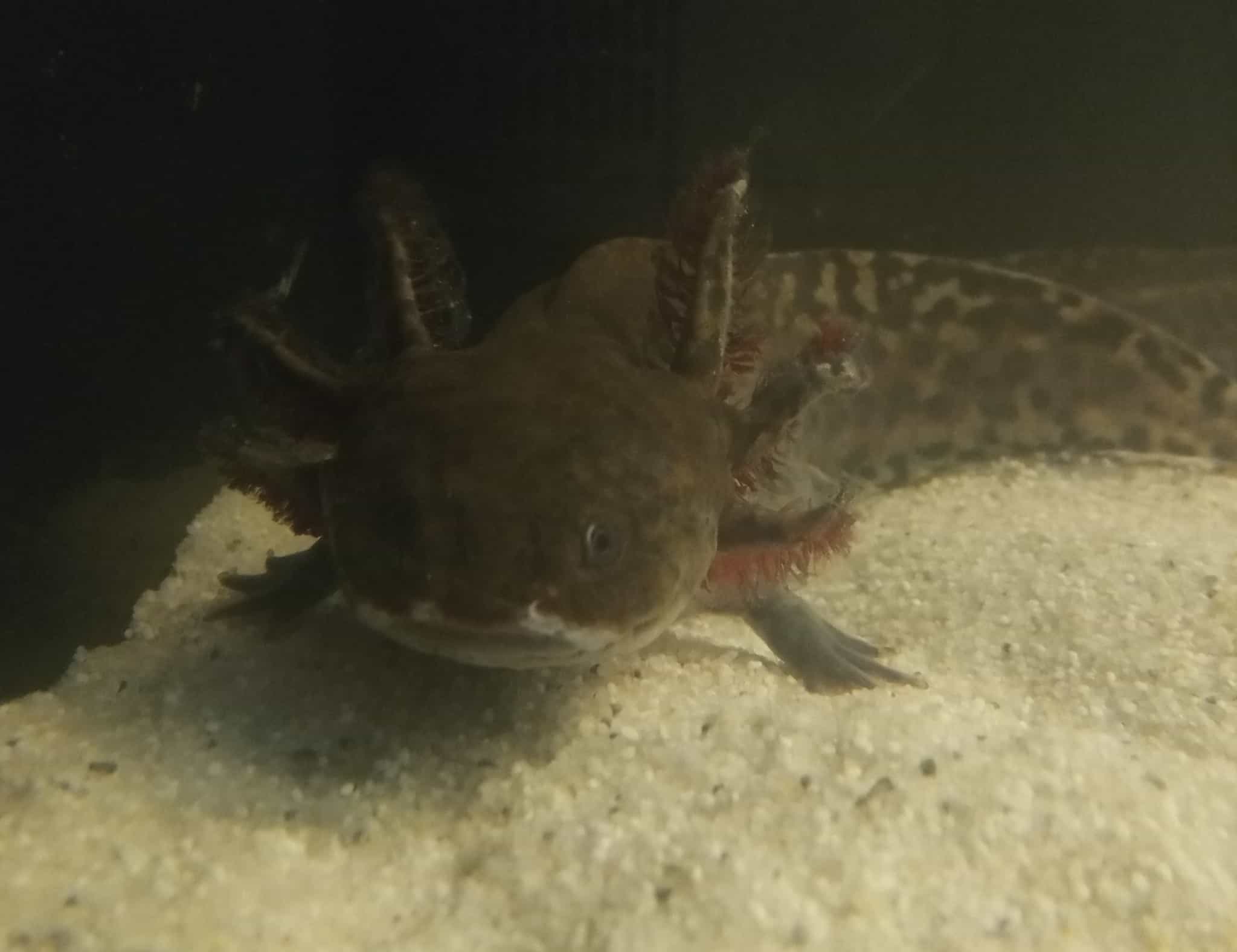
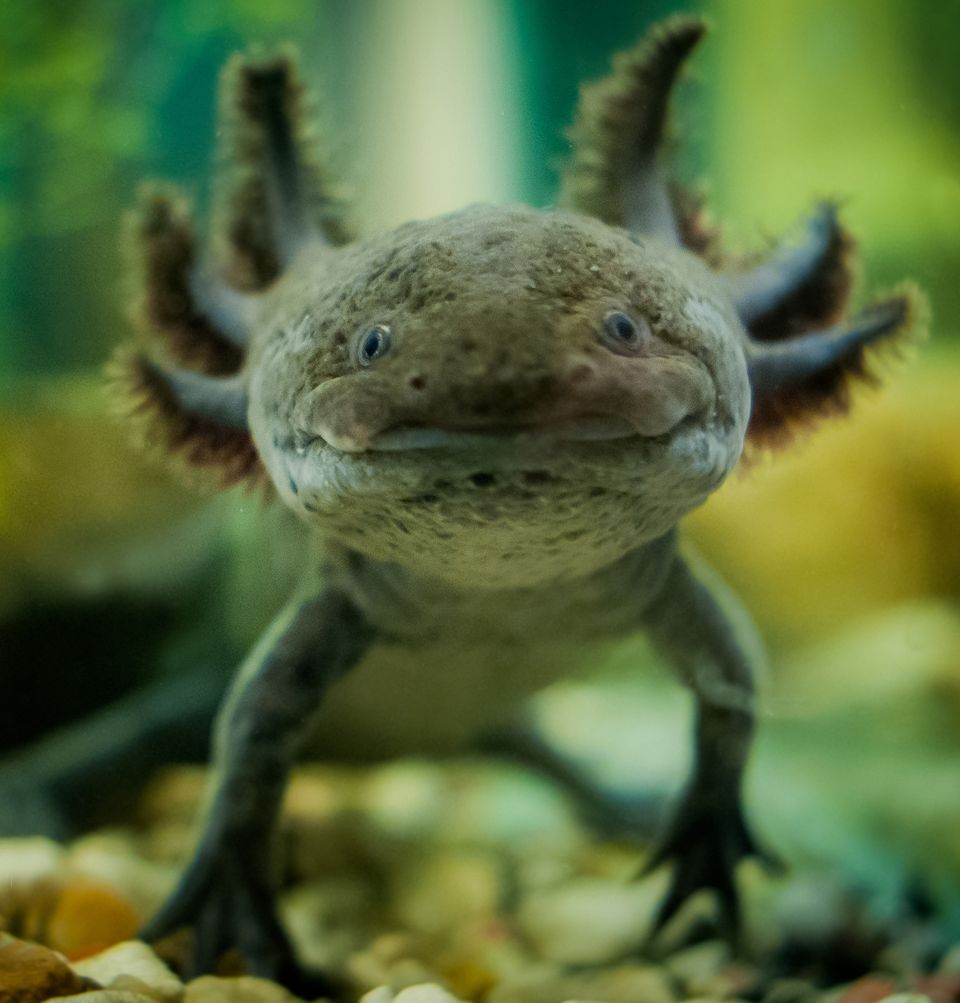
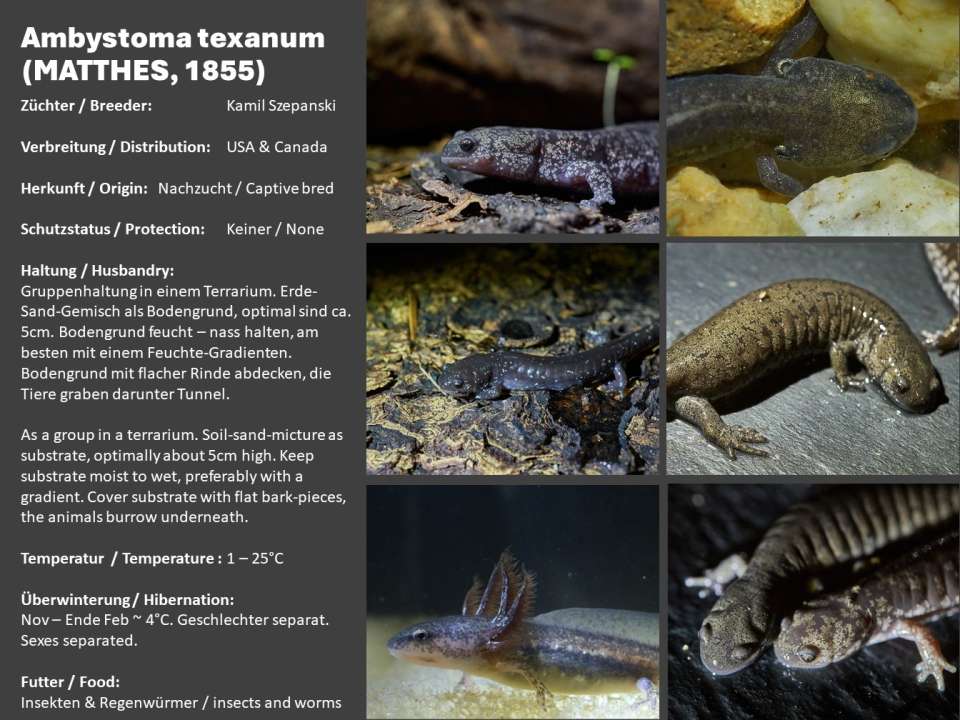
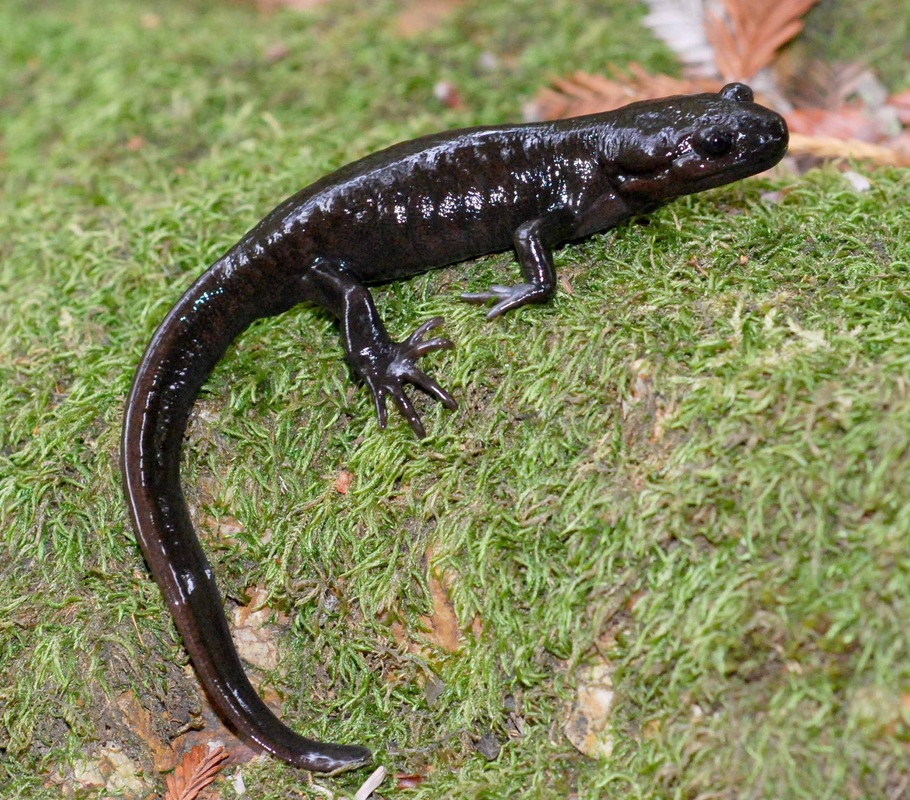
Las salamandras topo (Ambystomatidae) son un clado de anfibios caudados compuesto por 37 especies endémicas de México y Estados Unidos. El grupo estuvo un tiempo conformado solo por el género Ambystoma, tras haber incluido a los géneros Dicamptodon y Rhyacotriton, los cuales a su vez pasaron a formar grupos monotípicos. Sin embargo, Frost et al (2006) reubicó a Dicamptodon en Ambystomatidae, siendo este cambio posteriormente aceptado por el Centro de Herpetología de Norteamérica.[1] Actualmente, hay una controversia sobre esta reubicación.[2]
Cladograma basado en Good (1989).[3]
También se conoce el género extinto:
- Sanchizia[2] Dubois & Raffaëlli, 2012
Referencias
Bibliografía
- Duellman, W. E. 1993. Amphibian Species of the World: Additions and Corrections. Univ. of Kansas Printing Service. Lawrence, KS.
- Duellman, W. E. and L. Trueb. 1986. Biology of Amphibians. McGraw-Hill, New York.
- Estes, R. 1981. Gymnophiona, Caudata. Handbuch der Paläoherpetologie 2:1-115.
- Frost, D.R. « Ambystomatidae ». Amphibian Species of the World: an Online Reference. Version 6.2. (en inglés). Nueva York, EEUU: Museo Americano de Historia Natural. Consultado el 19 de mayo de 2014.
- Hedges, S. B., J. P. Bogart and L. R. Maxson. 1992. Ancestry of unisexual salamanders. Nature 356:708-710.
- Kraus, F. 1988. An empirical evaluation of the use of the ontogeny polarization criterion in phylogenetic inference. Systematic Zoology 37:106-141.
- Kraus, F., P. K. Ducey, P. Moler and M. M. Miyamoto. 1991. Two new triparental unisexual Ambystoma from Ohio and Michigan. Herpetologica 47:429-439.
- Larson, A. 1991. A molecular perspective on the evolutionary relationships of the salamander families. Evolutionary Biology 25:211-277.
- Larson, A. and W. W. Dimmick. 1993. Phylogenetic relationships of the salamander families: A analysis of congruence among morphological and molecular characters. Herpetological Monographs 7:77-93.
- Routman, E. 1993. Population structure and genetic diversity of metamorphic and paedomorphic populations of the tiger salamander, Ambystoma tigrinum. Journal of Evolutionary Biology 6:329-357.
- Shaffer, H. B. 1984. Evolution in a paedomorphic lineage. I. An electrophoretic analysis of the Mexican ambystomatid salamanders. 'Evolution 38:1194-1206.
- Shaffer, H. B., J. M. Clark and F. Kraus. 1991. When molecules and morphology clash: A phylogenetic analysis of the North American ambystomatid salamanders (Caudata: Ambystomatidae). Systematic Zoology 40:284-303.
- Shaffer, H. B. and M. L. McKnight. 1996. The polytypic species revisited: Genetic differentiation and molecular phylogenetics of the tiger salamander, Ambystoma tigrinum (Amphibia: Caudata) complex. Evolution 50:417-433.
- Spolsky, C. M., C. A. Phillips and T. Uzzell. 1992. Antiquity of clonal salamander lineages revealed by mitochondrial DNA. Nature 356:706-708.
- Templeton, A. R., E. Routman and C. A. Phillips. 1995. Separating population structure from population history: A cladistic analysis of the geographical distribution of mitochondrial DNA haplotypes in the tiger salamander, Ambystoma tigrinum. Genetics 140:767-782.
- Twitty, V. C. 1966. Of Scientists and Salamanders. W. H. Freeman and Company. San Francisco, California.
Enlaces externos
- Wikispecies tiene un artículo sobre Ambystomatidae.
- Wikimedia Commons alberga una categoría multimedia sobre Ambystomatidae.
- Ambystomatidae en AmphibiaWeb
- Dicamptodontidae en AmphibiaWeb
- Ambystomatidae en Tree of Life
- Dicamptodontidae en Tree of Life
- Enciclovida tiene un artículo sobre Ambystomatidae.
- Naturalista tiene una ficha sobre Ambystomatidae.
- Artículo sobre el declive de anfibios en México y la medición práctica de su estado de conservación (artículo académico) en academia.edu